

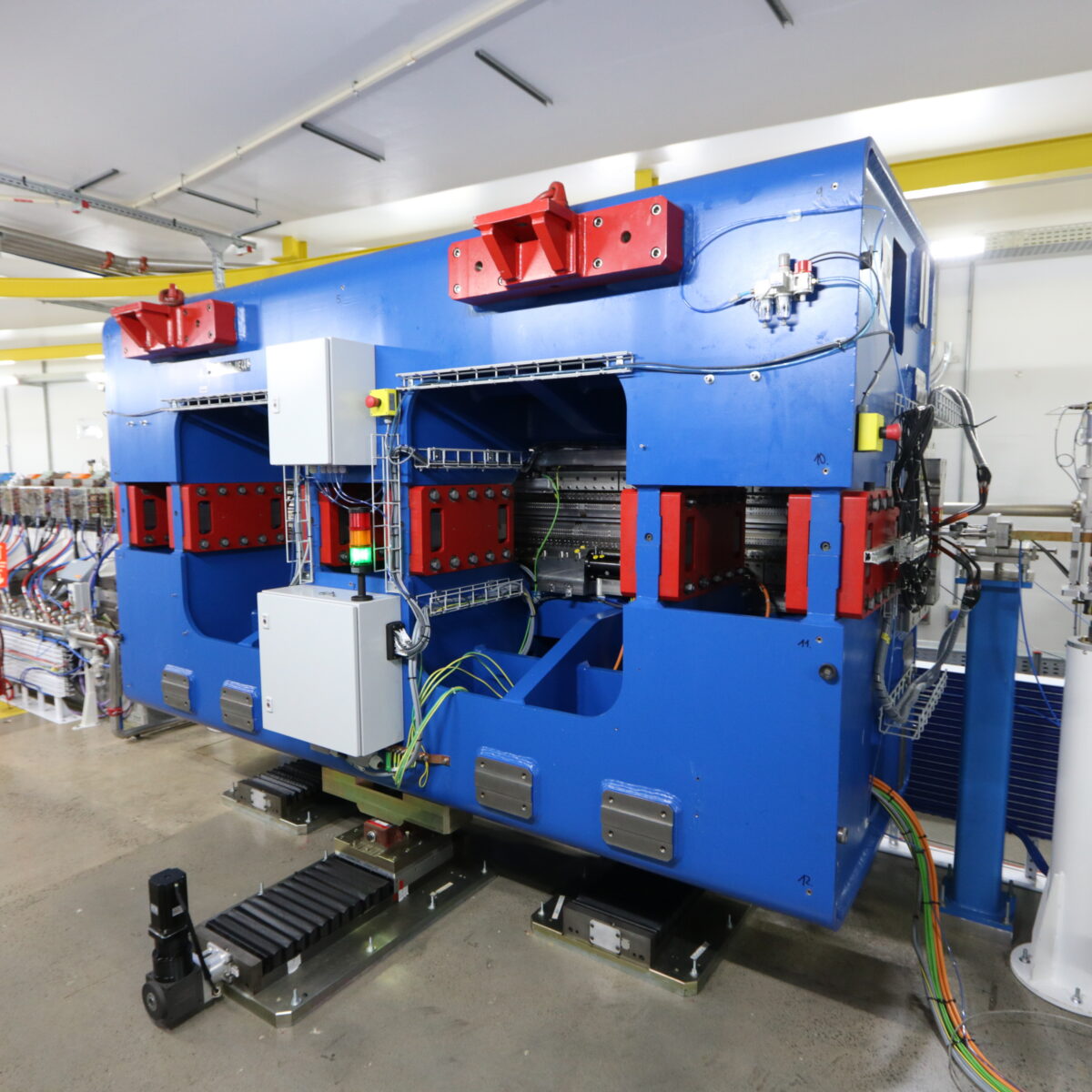
The new Ipê beamline undulator installed in the Sirius storage ring. The device allows for polarization control and significantly increases the flux of photons available for experiments.
The update increases the photon flux by up to seven times and allows the exploration of phenomena previously inaccessible with the RIXS technique
The Ipê beamline at Sirius — the synchrotron light source of the Brazilian Center for Research in Energy and Materials (CNPEM) — is undergoing a major upgrade with the replacement of its undulator — the component responsible for generating the synchrotron radiation used in experiments. The change represents a strategic advance for research using the Resonant Inelastic X-ray Scattering (RIXS) technique, one of the most demanding in terms of brightness and source control.
The new source for the Ipê beamline is an Elliptical Polarizing Undulator (EPU) measuring 3.4 meters in length, replacing the previous 1-meter device. Increasing the effective length of the undulator results in a significant gain in brightness and photon flux at the sample, as well as allowing complete control of the polarization of the incident radiation—linear horizontal, vertical, and circular. These advancements elevate the performance of RIXS experiments to a new level.
The most immediate impact is the increase in photon flux. The radiation intensity at the sample can be up to seven times greater — a particularly relevant advance for RIXS experiments, in which the signal is inherently weak. This gain translates not only into faster acquisitions, but also into a change in the experimental regime, enabling systematic sweeps of energy, angle, momentum, temperature, and external fields within realistic experimental times. “The number of photons per second arriving at the sample increases significantly—this completely changes the type of experiment we can perform”, explains Tulio Costa Rizuti da Rocha, the coordinator of the Ipê beamline.
This increase in intensity also has an impact on spectral resolution. The greater availability of photons allows operation with a narrower incident bandwidth, while maintaining adequate statistics, enabling the investigation of excitations at increasingly smaller energy scales. This opens the way for the study of low-energy phenomena, such as collective excitations and quantum fluctuations, which were previously beyond the experimental reach of the beamline.
Furthermore, controlling the polarization introduces selectivity into the excitation processes. The dependence of the RIXS signal on the polarization state of the incident light and the scattering geometry allows access to the symmetry of the excitations through selection rules. In practice, this enables dichroism experiments (linear and circular) and the separation of different scattering channels, such as magnetic, orbital, and charge contributions, decisively expanding the ability to interpret and decompose RIXS spectra.
Altogether, these advances redefine the experimental regime of the Ipê beamline, combining high flux, high resolution, and polarization control with RIXS experiments. This allows not only more efficient measurements, but also systematic access to low-energy excitations, weak scattering channels, and symmetry-dependent effects, opening up new possibilities, for example, in the study of emergent phenomena in quantum materials.
The new undulator was not built from scratch: it came from the Paul Scherrer Institute, where it operated at the Swiss Light Source (SLS) synchrotron. The incorporation of this equipment into Sirius was made possible by an international collaboration that involved both scientific and strategic aspects.
During the recent upgrade of the SLS magnetic lattice, the Swiss laboratory needed to reorganize the accelerator’s internal space. The new machine configuration, more compact and with a higher density of components, imposed physical restrictions that made it difficult to operate longer and bulkier undulators. As a result, some previously used devices needed to be replaced by more compact versions, opening up opportunities for the reuse of this complex equipment.
The acquisition of the undulator by CNPEM was, therefore, an efficient solution in multiple respects. In addition to reducing costs, the initiative strengthened the partnership with PSI. Part of this agreement involves joint scientific activities during the period of modernization of both facilities.
The installation of the new undulator presented significant technical challenges. Measuring approximately 3.4 meters in length in its magnetic section and weighing approximately 17.5 tons, it is the largest insertion device ever installed at Sirius. “It was one of the heaviest pieces of equipment we’ve ever installed at Sirius, and we had to increase the capacity of our equipment for movement and positioning inside the tunnel. The biggest challenge is positioning and aligning this load with a tolerance of tens of micrometers”, highlights Sergio Lordano, leader of the Insertion Devices and Photon Diagnostics group (IDS).
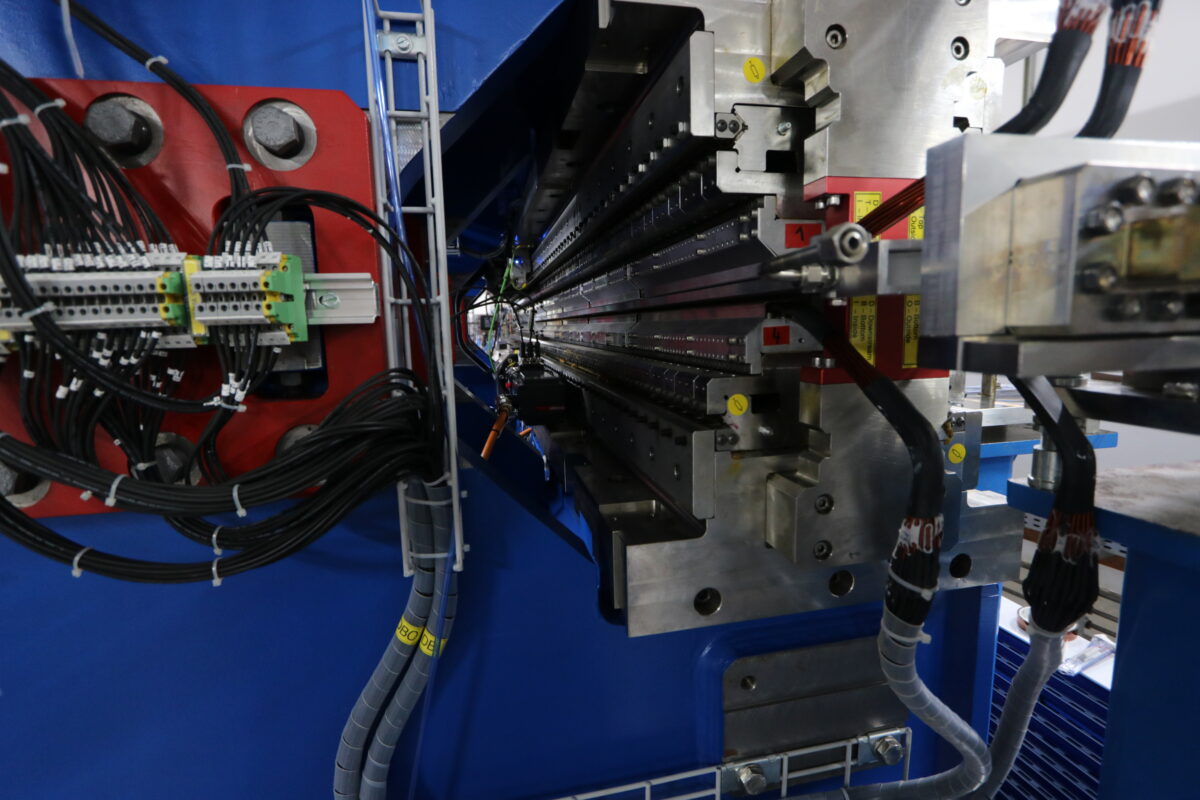
Magnet arrays of the undulator positioned around the vacuum chamber in the Sirius storage ring. The alignment of the assembly requires tolerances on the order of tens of micrometers.
In addition to the equipment’s dimensions, the installation required a number of precautions related to the accelerator’s vacuum system. The main vacuum chamber, acquired with the Swiss Light Source (SLS) undulator, has an internal coating that helps achieve the ultra-high vacuum conditions required for Sirius operation. Before installation, the chamber underwent tests and inspections conducted by the team from the Deputy Directorate of Technology (DAT) to verify the integrity and efficiency of this coating. “We needed to ensure that the chamber could be installed without compromising the quality of the vacuum system in the storage ring”, explains Thiago Mendes da Rocha, manager of the Vacuum, Pressure and Cryogenic Systems (VPC) group.
Alignment was also a critical aspect of the process. The gap between the undulator magnets and the accelerator vacuum chamber is on the order of hundreds of micrometers, which requires extremely precise positioning and makes the operation particularly delicate. Even tighter alignment tolerances—in the range of tens of micrometers—are essential to avoid any impact on the electron beam. “Continuous monitoring of the gap during movement, using calibrated blades and laser tracker measurements, was crucial to the success of the operation, allowing for fine adjustments and significantly increasing the reliability of the final positioning”, says Douglas Luis Passuelo, manager of the Metrology group (MET).
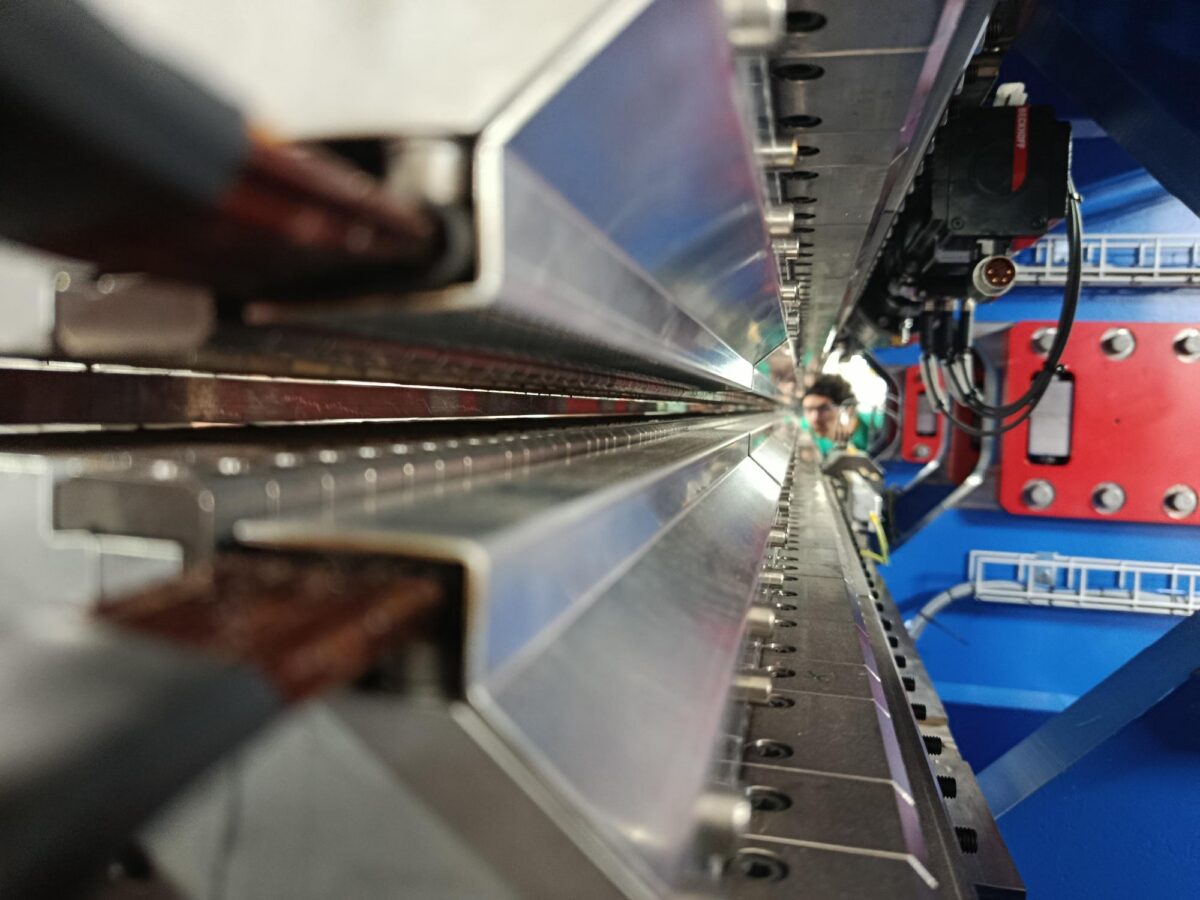
The distance between the magnet arrays of the new Ipê beamline undulator and the vacuum chamber is only a few hundred micrometers, requiring extremely precise alignment during installation.
The large dimensions of the undulator brought an extra layer of complexity to the work carried out by the teams of the Deputy Directorate of Technology (DAT). “This is a scenario where tolerances of thousandths of a millimeter are required along stretches of hundreds of meters, demanding a high level of technical precision”, says Douglas.
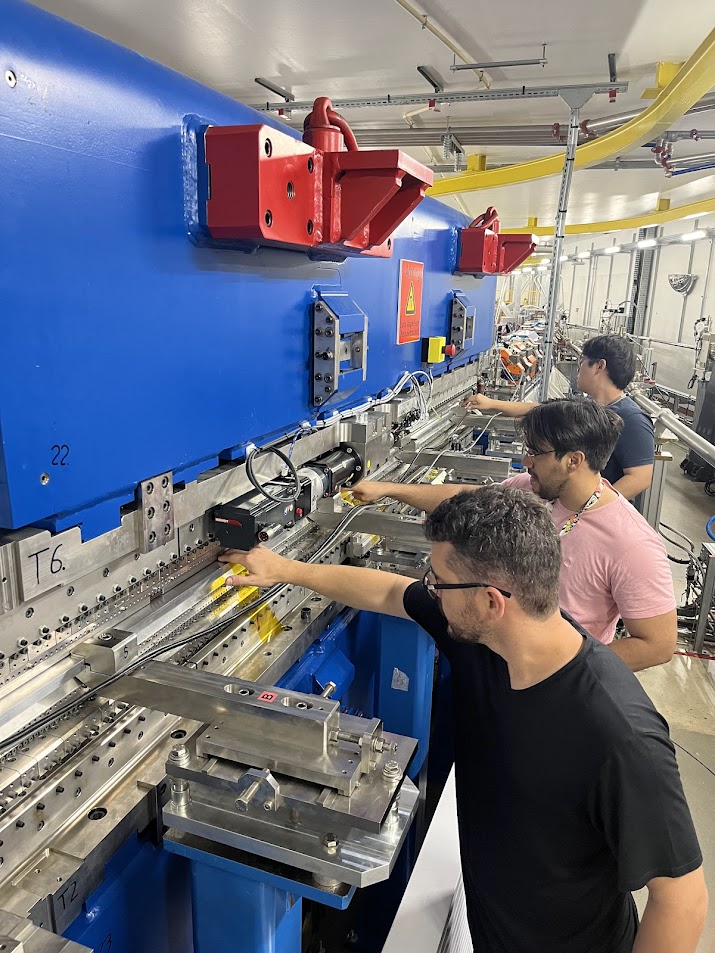
Members of the Metrology group (MET) using calibrated blades to monitor the gap between the magnet arrays and the vacuum chamber during the installation process.
With the installation complete, the line now enters a phase of technical and scientific commissioning. This process includes everything from validating the operation of the undulator to the complete realignment of the optical elements. Since the new source significantly alters the beam profile, the entire beamline will need to be adjusted to operate properly.
The expectation is that, after this stage, Ipê will resume serving users with expanded capabilities. In addition to accelerating existing experiments, the new configuration will allow the exploration of previously inaccessible phenomena, consolidating the beamline as a cutting-edge platform for advanced studies with synchrotron light.
The Brazilian Synchrotron Light National Laboratory (LNLS) works with scientific research and technological development that involves synchrotron light, focusing on the operation and utilization of the multidisciplinary potential of Sirius, the country's most advanced scientific infrastructure. With ten research stations already online and open to the scientific and industrial communities, Sirius allows thousands of researchers from various areas to test their hypotheses about the microscopic mechanisms that produce the properties of both natural and synthetic materials which are used in a variety of fields such as health, the environment, energy, and agriculture. LNLS is part of the Brazilian Center for Research in Energy and Materials (CNPEM) in Campinas, São Paulo, a private, non-profit organization overseen by the Ministry of Science, Technology and Innovation (MCTI).
The Brazilian Center for Research in Energy and Materials (CNPEM) is home to a state-of-the-art, multi-user and multidisciplinary scientific environment and works on different fronts within the Brazilian National System for Science, Technology and Innovation. A social organization overseen by the Ministry of Science, Technology and Innovation (MCTI), with the involvement of the Ministry of Education and the Ministry of Health, CNPEM is driven by research that impacts the areas of health, energy, renewable materials, and sustainability. It is responsible for Sirius, the largest assembly of scientific equipment constructed in the country, and is currently constructing Project Orion, a laboratory complex for advanced pathogen research. Highly specialized science and engineering teams, sophisticated infrastructure open to the scientific community, strategic lines of investigation, innovative projects involving the productive sector, and training for researchers and students are the pillars of this institution that is unique in Brazil and able to serve as a bridge between knowledge and innovation. CNPEM's research and development activities are carried out through its four National Laboratories: Synchrotron Light (LNLS), Biosciences (LNBio), Nanotechnology (LNNano), Biorenewables (LNBR), as well as its Technology Unit (DAT) and the Ilum School of Science — an undergraduate program in Science and Technology.
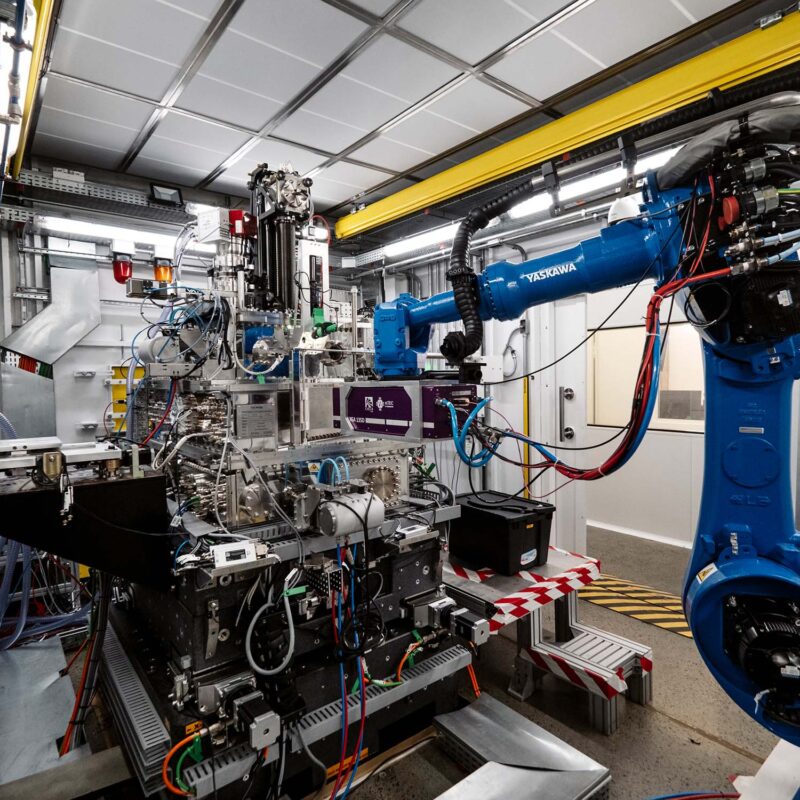
Designed to achieve resolutions on the order of 1 nanometer, the Sapoti station of the Carnaúba beamline combines cryogenics, ultra-high vacuum, and cutting-edge mechatronics engineering to reveal structures at the atomic scale

Infrastructure developed in partnership with Petrobras enables multiscale and automated tomographic imaging of carbonate samples