
Research led by scientists at Sirius found these diamonds contain a hydrated compound that can reach thousands of kilometers deep
Researchers from the Brazilian Center for Research in Energy and Materials (CNPEM) and other national collaborators have discovered unprecedented proof that water can be transported to regions deep within the Earth. The study, published in Scientific Reports (a journal in the Nature group), analyzed a rare diamond from Juína, Mato Grosso, and identified a complex mineral capable of carrying water to the lower mantle, offering new clues about how the planet stores and circulates water hundreds of kilometers below its surface.

The diamond is considered “superdeep,” formed under extreme conditions up to 800 kilometers below the Earth’s crust. This type of diamond is found in only a few places in the world; Juína is the main area where they are known to occur. Without significant commercial value as gemstones, these diamonds are generally used to produce cutting and grinding instruments, as well as surgical and precision tools. The CNPEM researchers initially obtained samples of these stones as donations from small-scale miners in the region, and later acquired new diamonds with funding from the Serrapilheira Institute.
The team found an inclusion of ferrous oxyhydroxide inside the diamond, composed of a combination of minerals such as goethite, hematite and magnetite. This combination forms a hydrated material that could serve as a “vehicle” capable of transporting water from the Earth’s surface to extremely deep regions.
The discovery is notable because the area deep within the Earth is subject to extreme temperatures and pressures. Temperatures can exceed 2,000 °C in regions of the mantle, an environment in which hydrated minerals capable of storing water or hydroxyl groups in their crystalline structure tend to become unstable.
“When we talk about the inside of the planet, we don’t think of hydrated minerals at such extreme depths. For this reason, any mineral that can maintain hydroxyls trapped within its crystalline structure under these conditions is extremely important for understanding how water can exist and circulate in the lower mantle,” explained Fernanda Gervasoni, a professor and researcher at the Federal University of Pelotas and CNPEM collaborator.
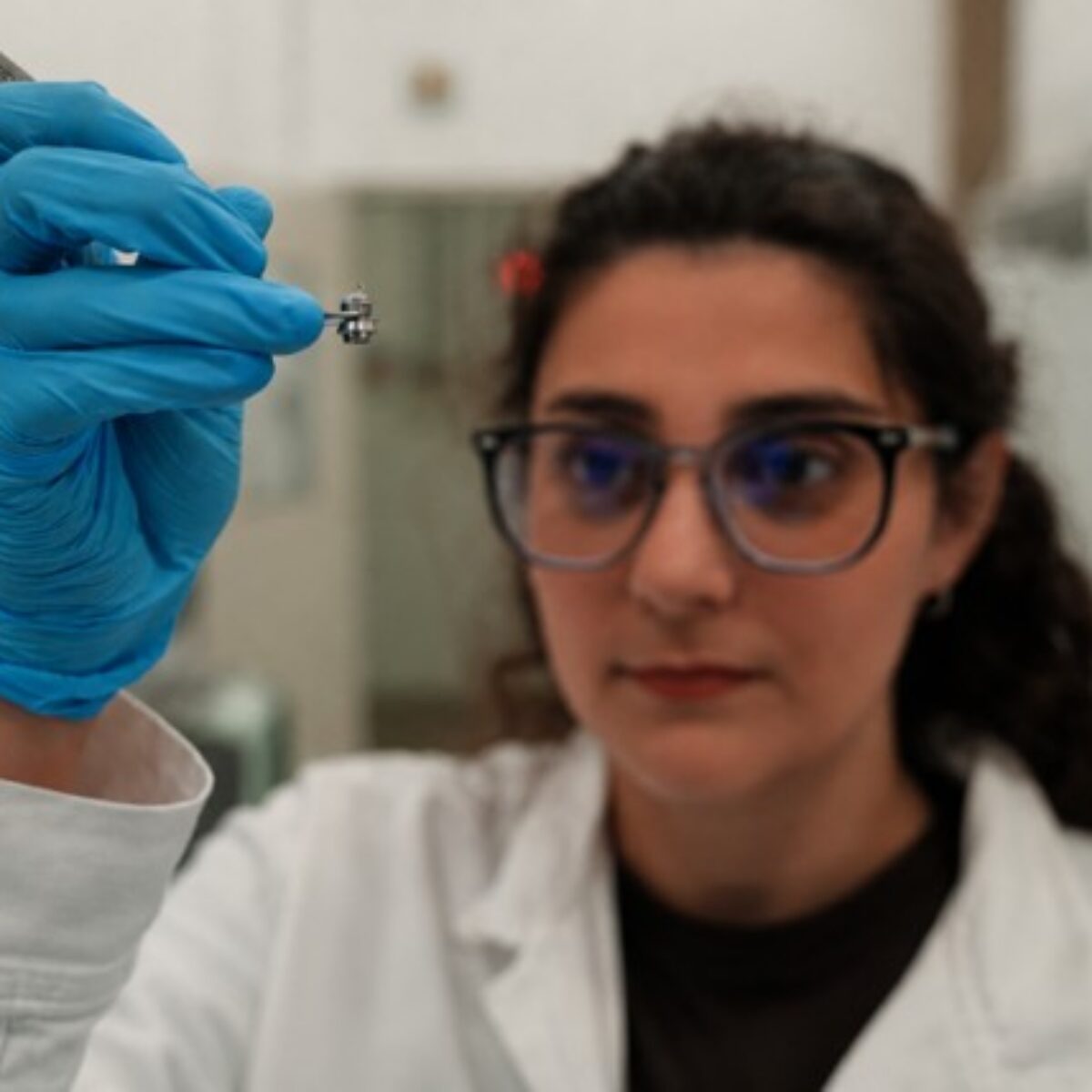
The research involved advanced synchrotron light techniques at Sirius, CNPEM’s fourth-generation particle accelerator, using the Mogno, Ema and Carnaúba beamlines. The state-of-the-art infrastructure made it possible to observe the composition and structure of the mineral preserved in the diamond at extremely high resolutions.
According to Gervasoni, the mineral they found probably originated from subduction zones, regions where the tectonic plates plunge inside the Earth, and underwent transformations under very high pressures and temperatures. During the process, the material would have released water and oxygen into the lower mantle.
“Water at these depths does not mean that underground oceans exist, but rather hydroxyls incorporated into the crystalline structure of minerals. Still, this profoundly alters the dynamics of the planet’s interior, and can influence processes such as rock fusion, magma formation and even the occurrence of deep earthquakes,” she added, explaining that the mineral was generally ignored in the past in similar studies. “When it appears in diamonds, this mineral is often treated as surface contamination. But we demonstrated that this inclusion was completely isolated inside the stone, without contact with fractures or with the external environment.”
This scientific finding reinforces the hypothesis that the water cycle on Earth is much more complex than previously imagined, involving not only oceans and the atmosphere but also processes deep inside the planet. Additionally, the release of water and oxygen at great depths can alter the fundamental properties of the mantle, such as its chemical composition, dynamics and physical behavior, affecting large-scale geological phenomena.
“The most interesting thing is that we observe the transformation of this mineral taking place within the inclusion, indicating that it had probably already released water inside the Earth. This helps us to better understand the chemical and physical processes that occur in extremely deep regions of the planet,” said Gervasoni.
The study’s first author was researcher Carolina Camarda, who conducted the research during her master’s degree at CNPEM. The work brings together scientists from CNPEM, as well as researchers from the University of Brasília (DF), the Federal University of Pelotas (RS), and the Federal University of Rio Grande do Sul (RS). The research was also supported by FAPESP, which funds researcher Fernanda Gervasoni’s postdoctoral project.

The Brazilian Synchrotron Light National Laboratory (LNLS) works with scientific research and technological development that involves synchrotron light, focusing on the operation and utilization of the multidisciplinary potential of Sirius, the country's most advanced scientific infrastructure. With ten research stations already online and open to the scientific and industrial communities, Sirius allows thousands of researchers from various areas to test their hypotheses about the microscopic mechanisms that produce the properties of both natural and synthetic materials which are used in a variety of fields such as health, the environment, energy, and agriculture. LNLS is part of the Brazilian Center for Research in Energy and Materials (CNPEM) in Campinas, São Paulo, a private, non-profit organization overseen by the Ministry of Science, Technology and Innovation (MCTI).
The Brazilian Center for Research in Energy and Materials (CNPEM) is home to a state-of-the-art, multi-user and multidisciplinary scientific environment and works on different fronts within the Brazilian National System for Science, Technology and Innovation. A social organization overseen by the Ministry of Science, Technology and Innovation (MCTI), with the involvement of the Ministry of Education and the Ministry of Health, CNPEM is driven by research that impacts the areas of health, energy, renewable materials, and sustainability. It is responsible for Sirius, the largest assembly of scientific equipment constructed in the country, and is currently constructing Project Orion, a laboratory complex for advanced pathogen research. Highly specialized science and engineering teams, sophisticated infrastructure open to the scientific community, strategic lines of investigation, innovative projects involving the productive sector, and training for researchers and students are the pillars of this institution that is unique in Brazil and able to serve as a bridge between knowledge and innovation. CNPEM's research and development activities are carried out through its four National Laboratories: Synchrotron Light (LNLS), Biosciences (LNBio), Nanotechnology (LNNano), Biorenewables (LNBR), as well as its Technology Unit (DAT) and the Ilum School of Science — an undergraduate program in Science and Technology.
Updates to the submission form and evaluation process aim to make project assessment more agile and transparent
Leading global meeting of the X-ray microscopy community will take place from August 30 to September 4 at CNPEM