
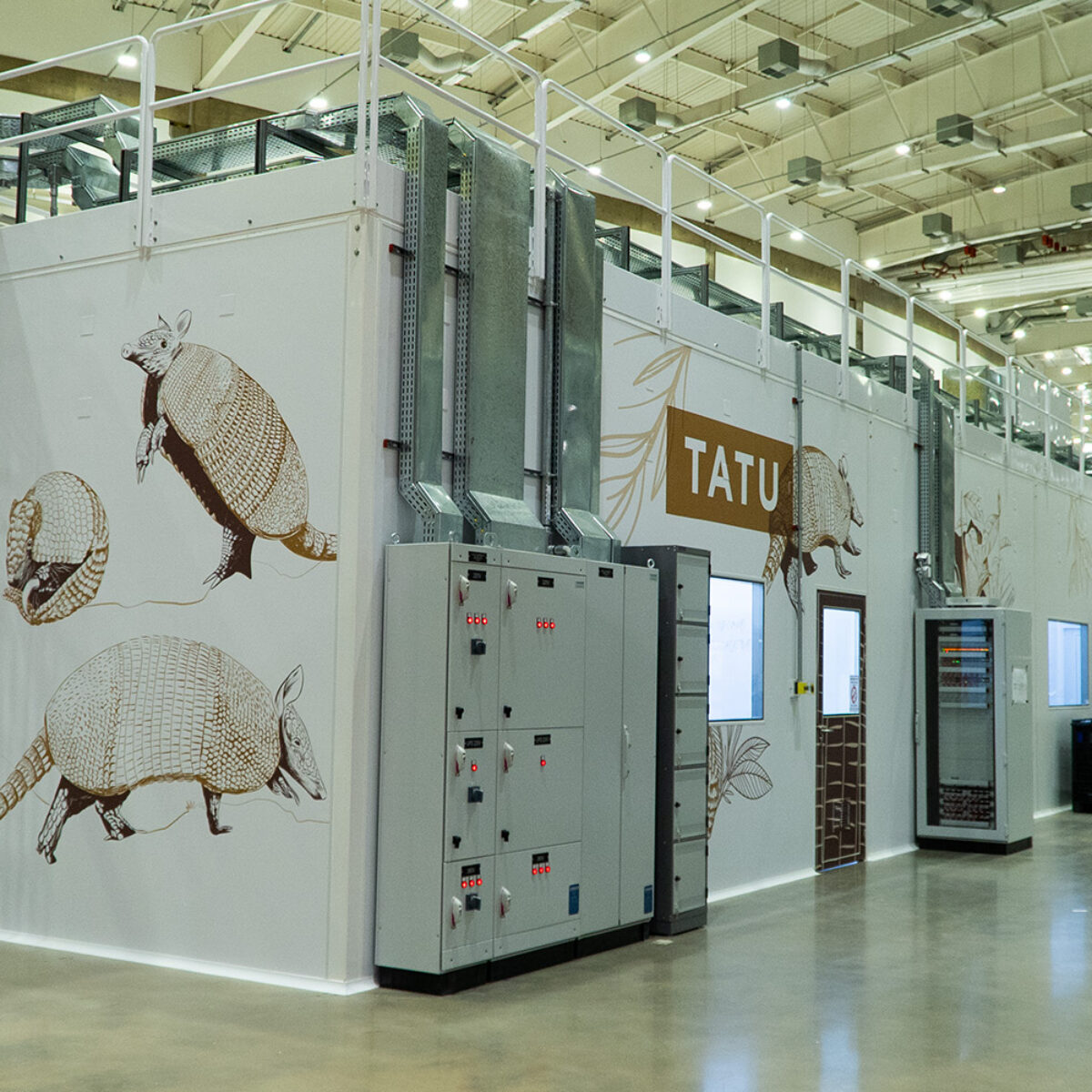
Experimental station of the Tatu beamline at Sirius. (Credit: CNPEM)
The first beamline of Sirius Phase 2 will be the world’s first to perform terahertz nano-spectroscopy at a fourth-generation synchrotron light source.
The arrival of the terahertz beam at the experimental station of the Tatu beamline at Sirius marks the beginning of its commissioning phase. Tatu is part of a package of ten new beamlines planned for Sirius Phase 2. It is the first beamline in the world specifically designed to operate in the terahertz range at a fourth-generation synchrotron light source.
The Tatu beamline was designed to explore the terahertz region of the electromagnetic spectrum, a frequency range associated with low-energy excitations that remains largely inaccessible through experimental techniques. In this region, researchers can investigate phenomena ranging from vibrations of heavier molecules to rotational modes and collective excitations in materials, enabling studies that cannot be performed using higher-energy radiation.
One of Tatu’s main distinguishing features is the combination of terahertz radiation with nano-spectroscopy techniques. Using an atomic force microscopy (AFM) probe-based method, the radiation is confined to volumes on the order of tens of nanometers, making it possible to analyze structures far smaller than the wavelength of the radiation itself. “We are able to produce a probe just a few nanometers wide and study objects that are much smaller than the wavelength of the radiation,” explains Raul Freitas, coordinator of the Imbuia and Tatu beamlines.
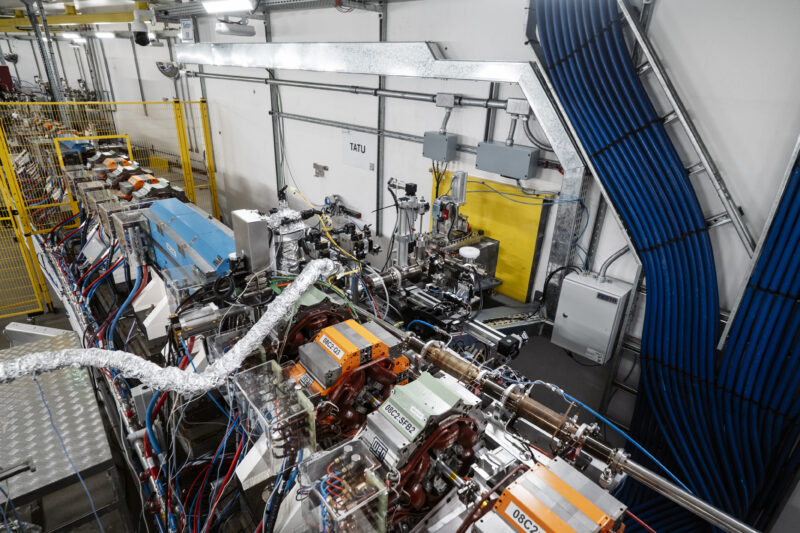
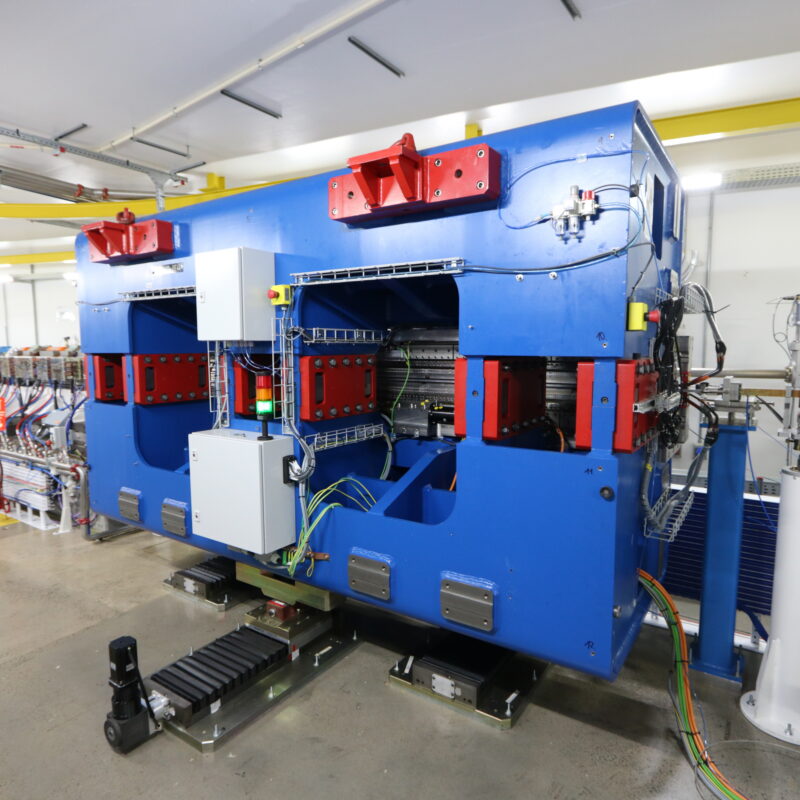
Connection between the Sirius Storage Ring and the Tatu beamline. (Credit: CNPEM)
This capability opens new opportunities for investigating quantum materials, including superconductors and topological insulators, as well as nanophotonic systems and a wide range of two-dimensional materials. It also holds potential for applications in fields such as telecommunications and data processing, particularly in the development of devices that use light, rather than electrons, to transmit information.
Beyond materials science, Tatu will also contribute to research on biological systems. The terahertz range provides access to fundamental information about the structure of biomolecules, expanding the set of tools available for studies in the life sciences.
Tatu is one of ten new beamlines planned for Sirius Phase 2, an expansion effort aimed at significantly broadening the facility’s experimental capabilities. This package also includes three beamlines that will be part of the Orion project, dedicated to advanced research on pathogens. These new experimental stations are driving the development and adoption of techniques that have so far seen limited use worldwide, strengthening Brazil’s position in emerging areas of scientific research.
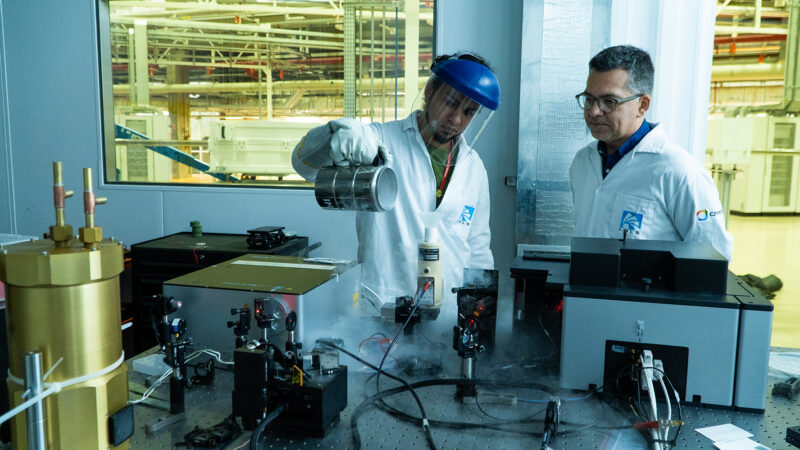
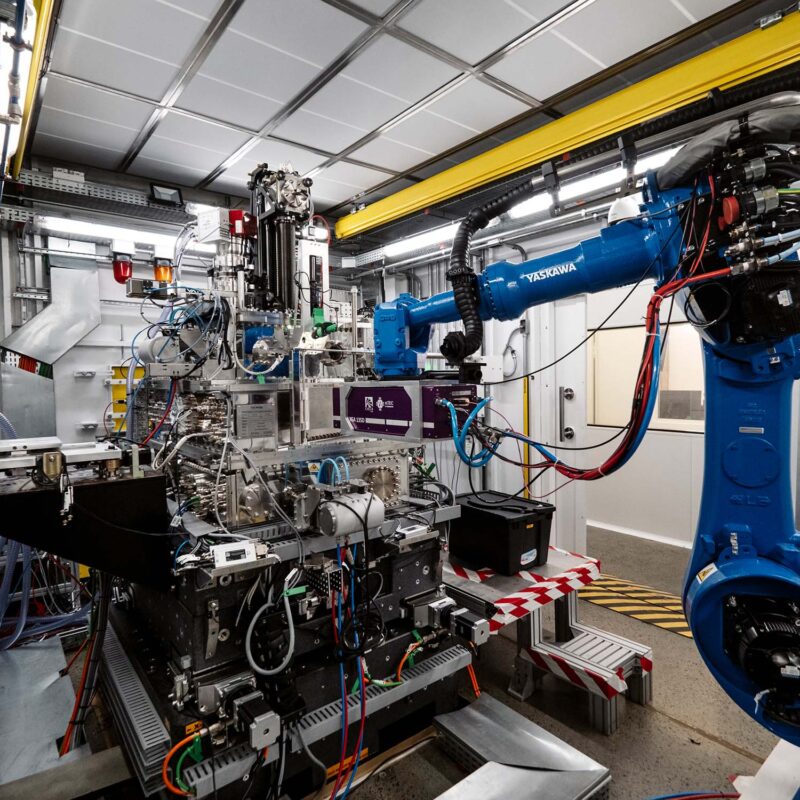
Interior of the Tatu beamline. (Credit: CNPEM)
With the recent observation of the terahertz beam at the experimental station, the Tatu beamline has now entered its technical and scientific commissioning phase. This stage involves calibrating the beamline components, characterizing the beam, and validating the experimental conditions required to use the radiation as a research tool.
Over the coming months, the beamline will be used in experiments conducted by invited users, who will help test and explore the capabilities of the facility. This is a crucial phase for fine-tuning operational parameters and developing experimental methodologies.
Following this period, Tatu will be incorporated into Sirius’ regular calls for research proposals. “Very soon, we’ll begin commissioning with advanced users, and within a few months the beamline should be open to the entire scientific community,” says Raul.
The Brazilian Synchrotron Light National Laboratory (LNLS) works with scientific research and technological development that involves synchrotron light, focusing on the operation and utilization of the multidisciplinary potential of Sirius, the country's most advanced scientific infrastructure. With ten research stations already online and open to the scientific and industrial communities, Sirius allows thousands of researchers from various areas to test their hypotheses about the microscopic mechanisms that produce the properties of both natural and synthetic materials which are used in a variety of fields such as health, the environment, energy, and agriculture. LNLS is part of the Brazilian Center for Research in Energy and Materials (CNPEM) in Campinas, São Paulo, a private, non-profit organization overseen by the Ministry of Science, Technology and Innovation (MCTI).
The Brazilian Center for Research in Energy and Materials (CNPEM) is home to a state-of-the-art, multi-user and multidisciplinary scientific environment and works on different fronts within the Brazilian National System for Science, Technology and Innovation. A social organization overseen by the Ministry of Science, Technology and Innovation (MCTI), with the involvement of the Ministry of Education and the Ministry of Health, CNPEM is driven by research that impacts the areas of health, energy, renewable materials, and sustainability. It is responsible for Sirius, the largest assembly of scientific equipment constructed in the country, and is currently constructing Project Orion, a laboratory complex for advanced pathogen research. Highly specialized science and engineering teams, sophisticated infrastructure open to the scientific community, strategic lines of investigation, innovative projects involving the productive sector, and training for researchers and students are the pillars of this institution that is unique in Brazil and able to serve as a bridge between knowledge and innovation. CNPEM's research and development activities are carried out through its four National Laboratories: Synchrotron Light (LNLS), Biosciences (LNBio), Nanotechnology (LNNano), Biorenewables (LNBR), as well as its Technology Unit (DAT) and the Ilum School of Science — an undergraduate program in Science and Technology.
The update increases the photon flux by up to seven times and allows the exploration of phenomena previously inaccessible with the RIXS technique
Designed to achieve resolutions on the order of 1 nanometer, the Sapoti station of the Carnaúba beamline combines cryogenics, ultra-high vacuum, and cutting-edge mechatronics engineering to reveal structures at the atomic scale