
Proposal submission will be open from August 25 to September 15, 2026. Researchers may be contacted by beamline coordinators for clarification and potential adjustments to the submitted proposals until September 29, 2026.
Proposal submission will be open from August 25 to September 15, 2026. Researchers may be contacted by beamline coordinators for clarification and potential adjustments to the submitted proposals until September 29, 2026.
The Brazilian Center for Research in Energy and Materials (CNPEM), an organization supervised by the Ministry of Science, Technology and Innovation (MCTI), opens the eighth regular call for submission of research projects at Sirius, a fourth-generation synchrotron light source operated by the Brazilian Synchrotron Light Laboratory (LNLS).
Researchers interested in conducting experiments at the twelve Sirius beamlines available in this call may submit proposals from August 25 to September 15 through the SAU Online platform. The results of the call will be published on the CNPEM website in November 2026.
In addition to free access for academic purposes, researchers from Brazilian and foreign institutions residing in Latin American and Caribbean countries may request financial assistance for meals, accommodation, and travel to Campinas (SP), where the CNPEM campus is located.
In the previous call, the submission form was updated to make the scientific evaluation process clearer and more efficient, in addition to optimizing beamline usage. The change encourages more concise and objective texts, with well-defined hypotheses and consistent descriptions of the proposed experiment.
The new model now values clarity, adherence to the scientific method, and detailed preliminary characterizations that support the feasibility of the study. The goal is to facilitate the identification of the study’s core idea and the experiment’s maturity level.
“These updates are part of a continuous improvement process, built in dialogue with the Sirius user community. The objective is to make submission and evaluation clearer and more efficient, valuing more objective and well-founded proposals, and contributing to the best use of Sirius,” says the LNLS Director, Harry Westfahl Jr.
With this, CNPEM seeks to make the evaluation more agile, transparent, and aligned with best practices, mitigating ambiguities, and increasing the quality of submitted proposals.
In addition to the changes in the proposal format, the technical feasibility evaluation process was also modified, becoming more active, continuous, and integrated into the submission flow.
The analysis will now be carried out from the moment the proposal is submitted, without the need to wait for the final deadline of the call. Beamline researchers will provide feedback as soon as possible, allowing proponents to clarify aspects of the experiment and, when feasible, adjust the proposal to the beamline’s capabilities.
During this period, researchers may be contacted by beamline coordinators for clarification and potential adjustments to the submitted proposals.
Twelve beamlines are enabled to receive research proposals in this call. The Manacá and Cedro beamlines continue to receive proposals in a continuous flow, through the Fast Track modality, meaning these beamlines are open for proposal submissions continuously, without any interruption.
In this call, the Ipê beamline returns to receiving proposals after the installation of a new undulator, which significantly expands its capabilities. Another highlight is the availability of the Sapê beamline for ARPES (Angle-Resolved Photoemission Spectroscopy) experiments.
The beamlines receiving proposals in this new cycle are:
Proposals will be evaluated through a double-anonymous distributed evaluation process, in which the Principal Investigators (PIs) of the call also act as reviewers for other proposals from the community. Each submitted proposal is analyzed by at least five reviewers, and each PI must evaluate five proposals, regardless of whether they are new submissions or resubmissions.
The quality of the reviews is taken into account in the final score of the proposal. Superficial or missing technical comments will result in penalties. The guidelines for the evaluation process are available on the LNLS user page.
As in recent calls, well-evaluated proposals that were not awarded beamtime in the previous call may be resubmitted in this edition, with an automatic addition of 0.2 points to the original score. For this, the content of the proposal must remain unchanged. If the proponent wishes to update the text, a new conventional submission must be made.
The resubmission feature is available on the SAU Online platform. Resubmitted proposals also require the completion of five Ad Hoc reviews by the Principal Investigator (PI), just like conventional submissions.
Although it is not yet part of this regular call, the Tatu beamline, dedicated to Terahertz Nanospectroscopy, has entered its commissioning phase. Experiments that assist in the final adjustments of this station are scheduled to occur throughout 2026, with the participation of invited users. The beamline will be available for regular submissions in future calls.
For more details on proposal submission and financial assistance, please consult the “Information for Users” page on the LNLS website. In case of doubts, please contact the User Office via email at edu@cnpem.br.
The Brazilian Center for Research in Energy and Materials (CNPEM) is home to a state-of-the-art, multi-user and multidisciplinary scientific environment and works on different fronts within the Brazilian National System for Science, Technology and Innovation. A social organization overseen by the Ministry of Science, Technology and Innovation (MCTI), with the involvement of the Ministry of Education and the Ministry of Health, CNPEM is driven by research that impacts the areas of health, energy, renewable materials, and sustainability. It is responsible for Sirius, the largest assembly of scientific equipment constructed in the country, and is currently constructing Project Orion, a laboratory complex for advanced pathogen research. Highly specialized science and engineering teams, sophisticated infrastructure open to the scientific community, strategic lines of investigation, innovative projects involving the productive sector, and training for researchers and students are the pillars of this institution that is unique in Brazil and able to serve as a bridge between knowledge and innovation. CNPEM's research and development activities are carried out through its four National Laboratories: Synchrotron Light (LNLS), Biosciences (LNBio), Nanotechnology (LNNano), Biorenewables (LNBR), as well as its Technology Unit (DAT) and the Ilum School of Science — an undergraduate program in Science and Technology.
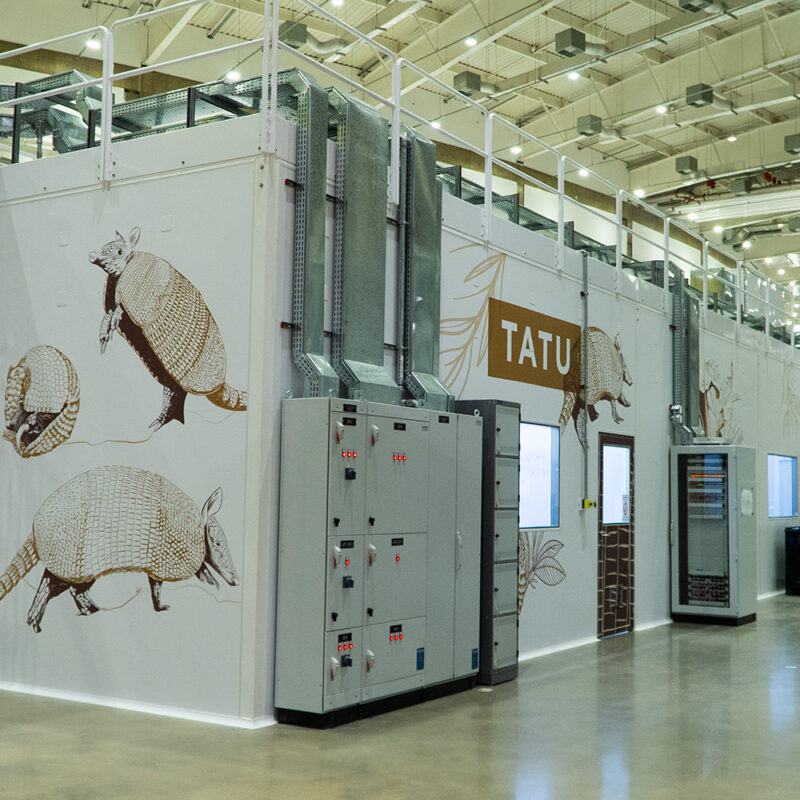
The first beamline of Sirius Phase 2 will be the world's first to perform terahertz nano-spectroscopy at a fourth-generation synchrotron light source.
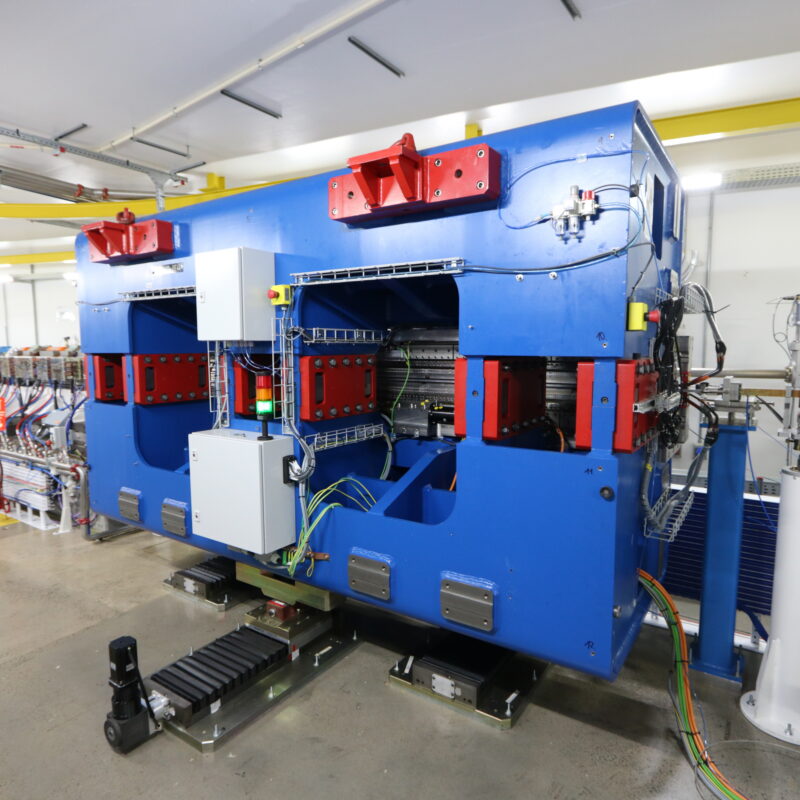
The update increases the photon flux by up to seven times and allows the exploration of phenomena previously inaccessible with the RIXS technique