
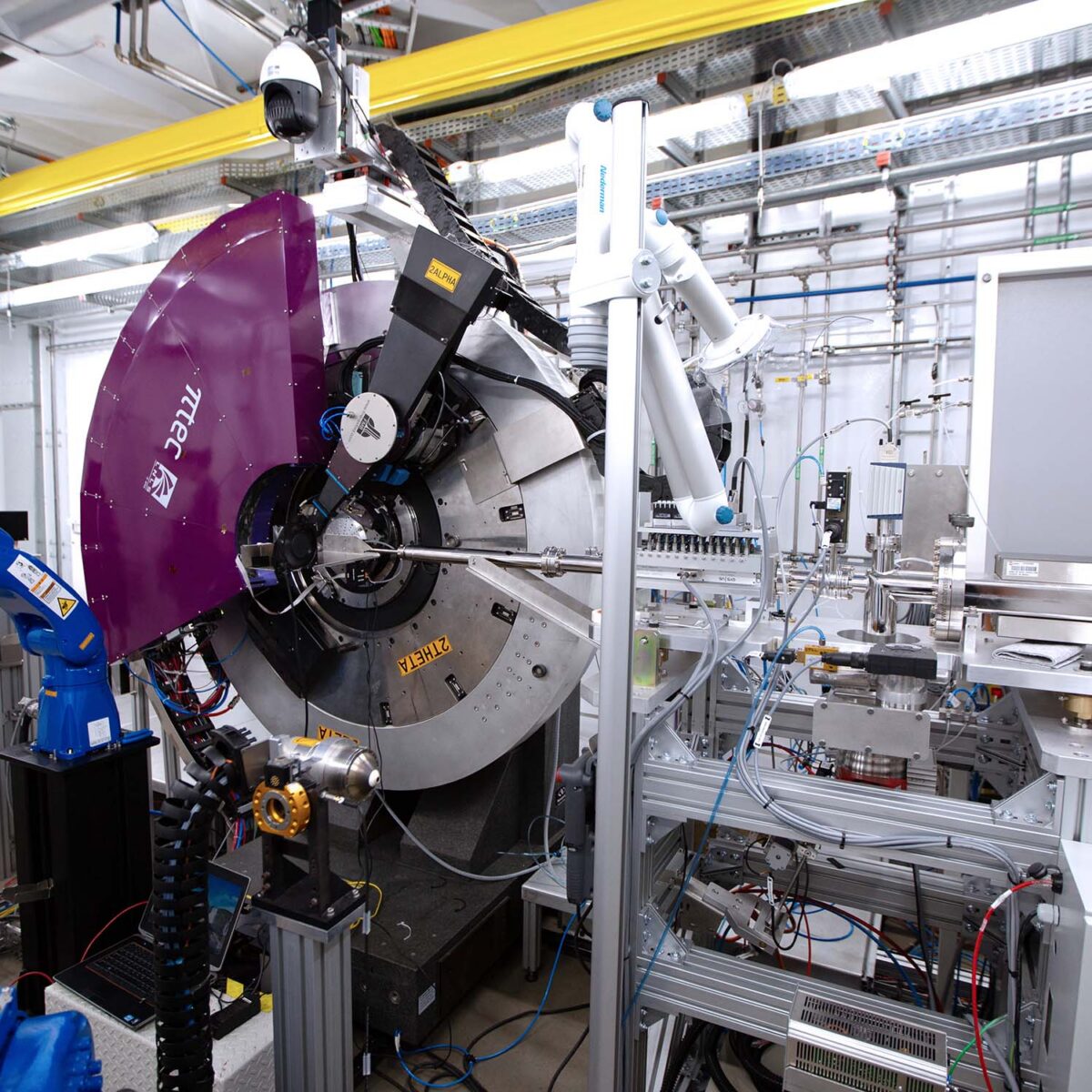
Paineira beamline experimental station (Credits: CNPEM)
New operational mode enables users to send powder samples for automated X-ray diffraction measurements of polycrystalline materials, expanding access to the beamline without the need to travel to CNPEM
The Paineira beamline, dedicated to synchrotron radiation X-ray diffraction measurements of polycrystalline materials (SR-PXRD) at Sirius, has just launched a new operational mode: Mail-in. This mode allows researchers to submit powder samples for high-quality analysis without the need to travel to CNPEM, expanding the possibilities for accessing the scientific infrastructure.
In Mail-in mode, proposals can be submitted continuously through the SAU Online Portal and are evaluated by the beamline team. After submission, safety assessment, and proposal acceptance, sample holders are shipped to the proposer’s address. Users prepare their samples in Kapton capillaries following the instructions provided in a dedicated manual, register the samples in the online ICAT system, and ship them back to CNPEM.
Once the samples arrive at Sirius, the measurements are performed fully automatically. Experiments are preferably conducted at night, on holidays, and on weekends, and users do not need to be present or remotely monitor data acquisition. After the measurements, the SR-PXRD patterns are automatically made available through the ICAT system or sent to the proposer by email.
Measurements are carried out within one to three months after the samples arrive at Sirius. The Mail-in mode supports both the MAC high-resolution detector, with a resolution of 0.008º FWHM at 16 keV, and the PIMEGA 450D fast detector, with a resolution of 0.050º FWHM at the available energies between 12 and 25 keV. Measurements can be performed at room temperature or with temperature variation using a cryojet over a range of 90 to 470 K.
The acquisition time, including dead time, is approximately 4 hours per sample in high-resolution mode and 5 minutes per sample with the fast detector. Each proposal can include up to 6 samples for high-resolution analysis or up to 40 samples for measurements with the fast detector at room temperature.
The Mail-in mode expands access to Sirius by allowing certain measurements to be performed without users being physically present at the beamline. The automation of the experiments also enables preferential use of nighttime periods, weekends, and holidays, contributing to more efficient use of beamtime.
Caption: Explanatory video on how the High-Throughput system at the Paineira beamline works.
The Mail-in mode is intended exclusively for inert samples that can be transported through the standard express delivery system. Examples include minerals, clays, ceramics, soils, pharmaceutical products, metal alloys, oxides, hydroxides, and metals. Flammable, pyrophoric, explosive, unstable, or oxidizing samples, as well as radioactive materials, biohazards, and human-derived samples, will not be accepted.
In this initial version, Mail-in mode is available for samples shipped from Brazil and Latin American countries, including the Caribbean. There is no limit to the number of proposals that can be submitted by a research group. However, in periods of high demand, the beamline team may prioritize first-time measurements or those related to the publication of papers, master’s dissertations, or PhD theses with approaching deadlines.
The launch of Mail-in mode represents another initiative to expand and diversify the ways in which the scientific community can access Sirius. By combining continuous proposal submission, automation, and sample shipment, the new mode provides an alternative for researchers who can carry out their experiments without the need for on-site participation.
More information is available on the Paineira beamline page and through the SAU Online system.
The Brazilian Center for Research in Energy and Materials (CNPEM) is home to a state-of-the-art, multi-user and multidisciplinary scientific environment and works on different fronts within the Brazilian National System for Science, Technology and Innovation. A social organization overseen by the Ministry of Science, Technology and Innovation (MCTI), with the involvement of the Ministry of Education and the Ministry of Health, CNPEM is driven by research that impacts the areas of health, energy, renewable materials, and sustainability. It is responsible for Sirius, the largest assembly of scientific equipment constructed in the country, and is currently constructing Project Orion, a laboratory complex for advanced pathogen research. Highly specialized science and engineering teams, sophisticated infrastructure open to the scientific community, strategic lines of investigation, innovative projects involving the productive sector, and training for researchers and students are the pillars of this institution that is unique in Brazil and able to serve as a bridge between knowledge and innovation. CNPEM's research and development activities are carried out through its four National Laboratories: Synchrotron Light (LNLS), Biosciences (LNBio), Nanotechnology (LNNano), Biorenewables (LNBR), as well as its Technology Unit (DAT) and the Ilum School of Science — an undergraduate program in Science and Technology.
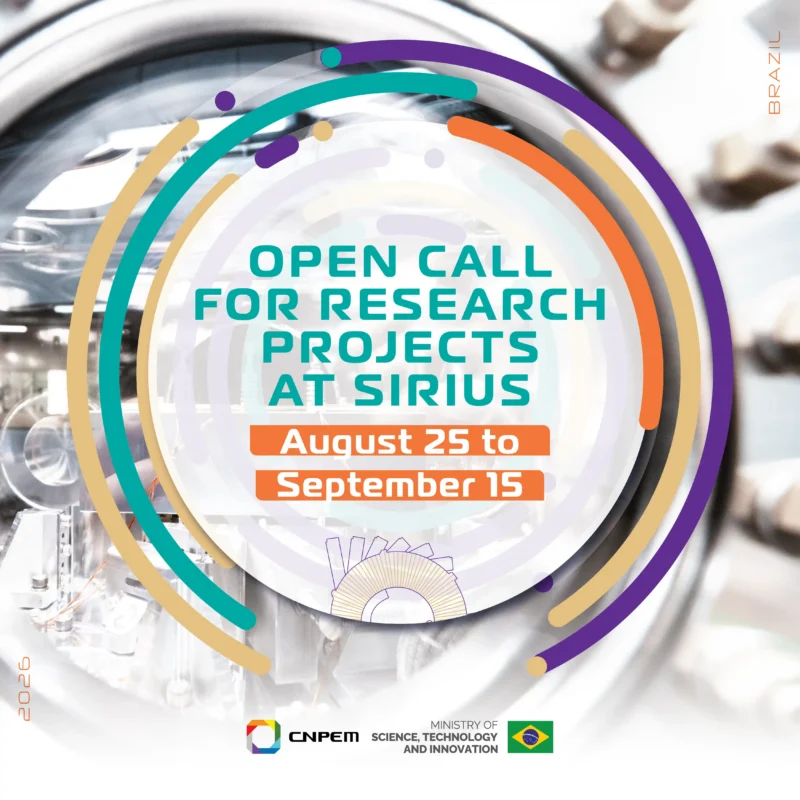
Proposal submission will be open from August 25 to September 15, 2026. Researchers may be contacted by beamline coordinators for clarification and potential adjustments to the submitted proposals until September 29, 2026.
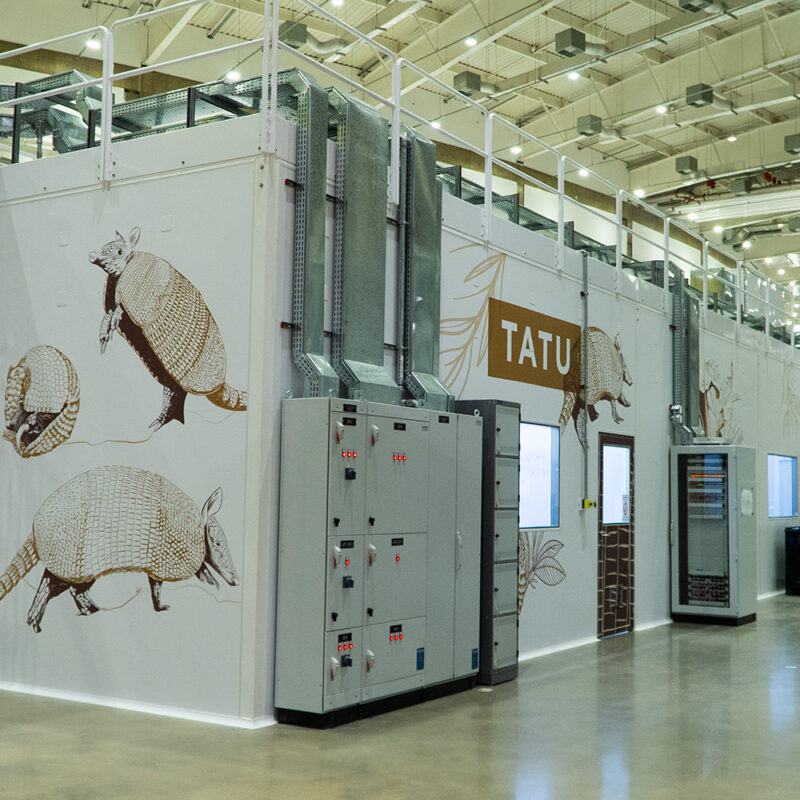
The first beamline of Sirius Phase 2 will be the world's first to perform terahertz nano-spectroscopy at a fourth-generation synchrotron light source.